
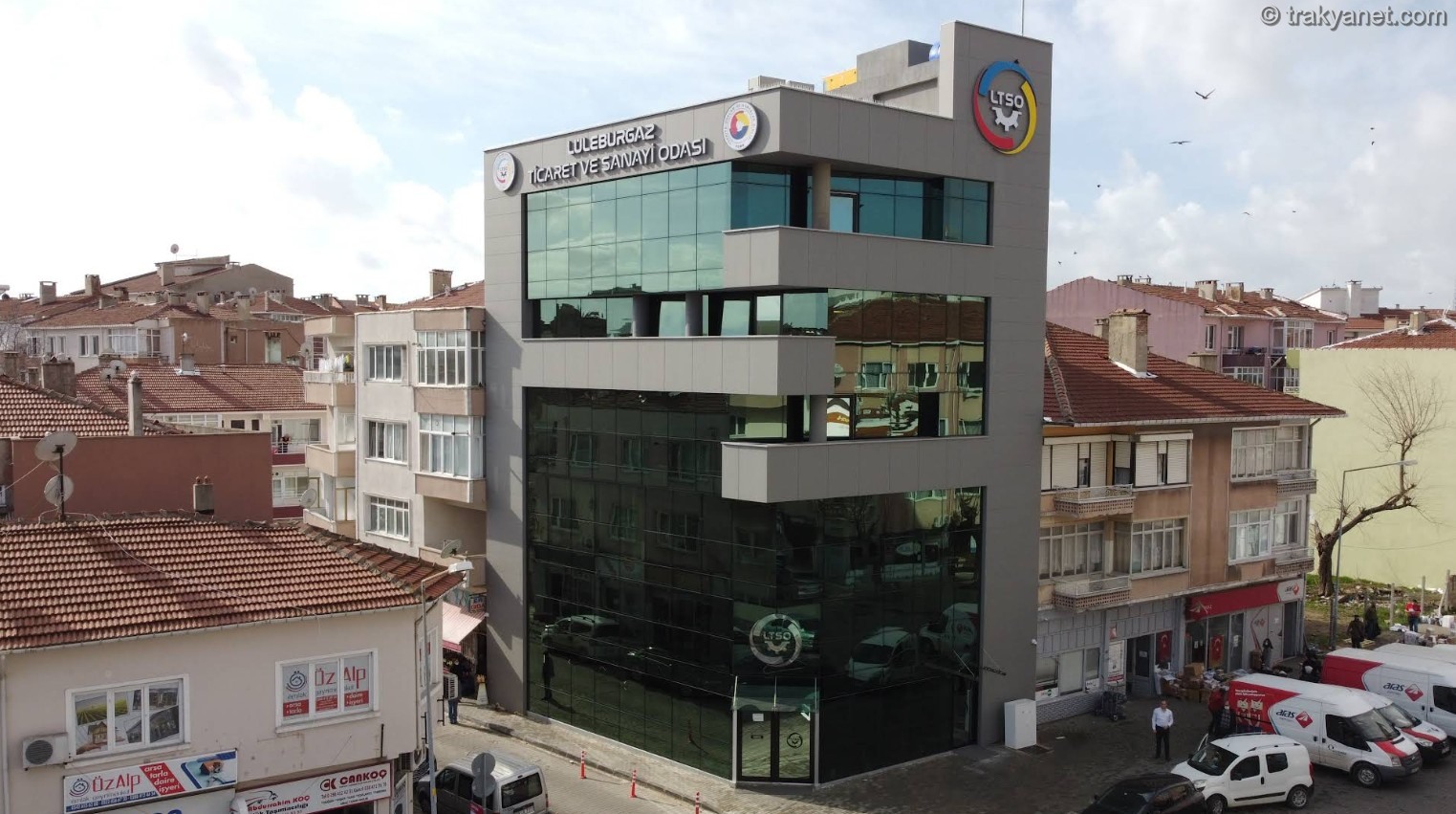
The Chamber was established in 1932 in Luleburgaz, upon the request of merchants located in Luleburgaz, to cover the districts of Luleburgaz, Babaeski, Vize, and Pehlivankoy. Its purpose is to meet the common needs of its members, facilitate and develop their professional activities, ensure honesty and trust in their relations with each other and the public, establish professional discipline and ethics, and provide solidarity, as well as to fulfill the services assigned to it by law.
The history of Luleburgaz, along with the history of Thrace, dates back to 4500-4000 BC. It is believed that the Odrisian tribe, a Thracian tribe that gave the region its name, settled there around 4200-4000 BC. According to some sources, the names given to the region by the Thracians were "Begule", "Bercilion", "Bergus" and "Burgaz". Around 700 BC, it fell into the hands of the Istiks, in 513 BC to the Persians, in 440 BC to the Athenians, then the Macedonians, and in 163 BC to the Romans. During the Roman period, it was called "Arkedioupolis" or "Arcadiopolis" in honor of Emperor Ardedus, who rendered great service. This name was also used during the Byzantine period. The Roman Empire in 4500-4000 AD... With its division into two in 395, it remained within the borders of the Eastern Roman Empire (Byzantine). Byzantine sources indicate that Luleburgaz was an important center at the bishopric level in the region during the Byzantine period.
However, it is not possible to find any artifacts reflecting this characteristic in the present day. Only a tower (Zindanbaba) and some walls belonging to the castle, thought to be from this period, exist in a heavily damaged state.
Later, in 1362, the city was conquered by Ottoman Sultan Murad I, marking the beginning of the Ottoman era in Luleburgaz. Luleburgaz's acquisition of an Ottoman city identity only occurred in the 16th century, thanks to the efforts of Grand Vizier Sokullu Mehmet Pasha in establishing the city. Sokullu Mehmet Pasha rebuilt Luleburgaz and transformed it into a city with a large complex, palace, and landscaping bearing his name.
Thus, the foundation of the Ottoman city, which would later take the name Luleburgaz due to the intensive production of pipe bowls, was laid.
According to travelers who visited the city in the 17th century and Evliya Celebi, there were many shops, a large and lively fair was held once a year, and this fair was completed under the name of the magic market.
19. Coming to the 19th century, first the rebellions in Greece and Bulgaria, followed by the Ottoman-Russian War of 1877-78, the Balkan Wars (1912-14), and World War I (1914-18), led to the shrinking of the Ottoman Empire in Rumelia, and ultimately to the occupation of its territories with the Treaty of Sèvres.
Luleburgaz suffered great damage in these wars, especially during the Balkan Wars. Occupied by the Bulgarians on October 29, 1912, the city returned to the Ottoman State with the Treaty of London signed on May 30, 1913. When World War I ended with the defeat of the Ottoman Empire, Thrace was occupied first by the French and then by the Greeks. The War of Independence (1919-1922), during which Turkey and consequently Luleburgaz experienced very painful days, ended with the victory of the Republic of Turkey, established in place of the Ottoman Empire, and the Thracian lands were liberated from the enemy with the Mudanya Agreement of 1922.
On November 8, 1922, the Turkish Army entered Luleburgaz and liberated the city from two years of occupation. This date is celebrated every year as the city's Liberation Day.
The city continued to be a district of Kirklareli during the Republican era.